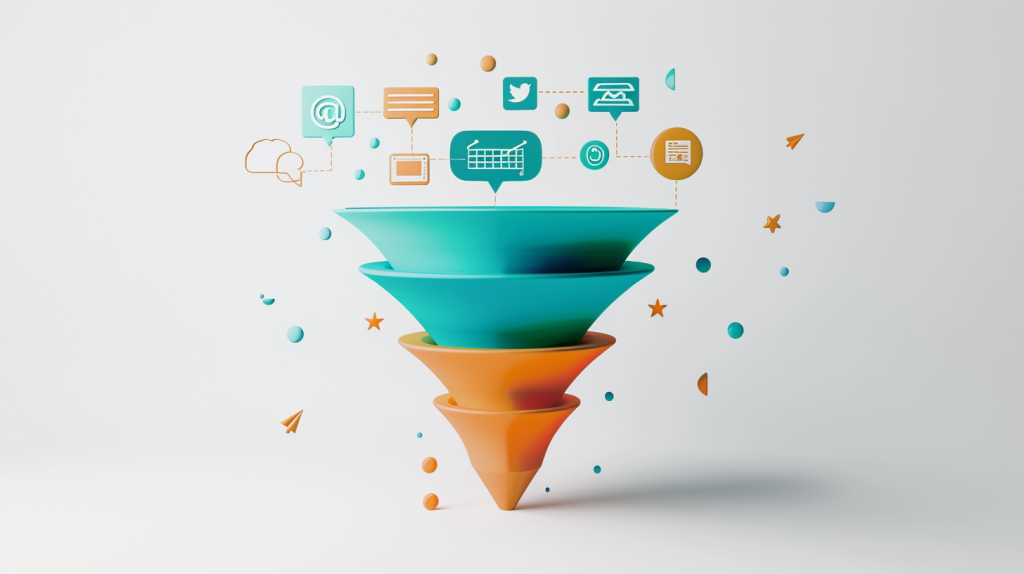
The word funnel gets thrown around a lot these days. ClickFunnels. Funnelization. Funnel hacking.
Everyone seems to be talking about funnels—but few people can clearly explain what they are or how they actually help you grow your business.
This blog seeks to demystify the marketing funnel once and for all. Because when you truly understand how your funnel works, you can find leaks, plug them, and turn your marketing from random activity into a predictable system that drives results.
Let’s break it down.
What Is a Marketing Funnel?
Think of your marketing funnel as the journey your potential customers take—from the first moment they hear about your brand to the point where they make a purchase (and ideally, become loyal advocates).
It’s called a funnel because you start with a wide audience at the top, and as people move through each stage, the group gets smaller and more qualified. Not everyone who sees your ad will buy—but the right funnel helps ensure the ones who do are the ones that matter most.
The 3 Core Stages of the Funnel
1. Top of Funnel (TOFU): Awareness
This is where you’re building brand visibility and trust.
Your goal here is not to sell—but to educate, entertain, or inspire.
Think:
- Social media ads introducing your brand
- Blog posts answering common customer questions
- Educational videos or infographics
If you skip this stage and go straight to selling, you’re likely to scare off potential customers who aren’t ready to buy yet.
2. Middle of Funnel (MOFU): Consideration
Now your audience knows who you are. The next question they’re asking is: “Why should I choose you?”
This stage is about nurturing leads.
- Offer helpful downloads (like guides or checklists)
- Share testimonials or case studies
- Run retargeting ads to stay top-of-mind
Your messaging should shift from awareness to value—show how you solve specific problems better than your competitors.
3. Bottom of Funnel (BOFU): Conversion
This is where the magic happens.
Your audience is ready to take action—they just need a little push.
Here’s where you use tactics like:
- Strong call-to-actions (CTAs)
- Free consultations or demos
- Limited-time offers
- Personalized email follow-ups
This stage isn’t about noise—it’s about clarity and confidence. Make the path to purchase simple and irresistible.
Bonus: Don’t Forget Post-Funnel—Retention & Advocacy
The funnel doesn’t end at “purchase.” Once a customer buys, your goal should be to keep them engaged.
Satisfied customers can become your best marketers.
- Follow up with thank-you emails
- Ask for reviews
- Offer loyalty programs or referral incentives
Retention is far cheaper than acquisition—and it builds a loyal base that fuels long-term growth.
Why Understanding Your Funnel Matters
When you understand your marketing funnel, you can:
- Identify where leads drop off
- Allocate your marketing budget more effectively
- Create better content for each stage
- Increase your conversion rate
In short: it turns guesswork into strategy.
Ready to Build a Smarter Funnel?
At The Marketing Counselors, we help small and medium-sized businesses build data-driven marketing funnels that attract, nurture, and convert the right audience.
If you’re ready to turn your marketing chaos into clarity, schedule a free consultation and let’s design your funnel together.